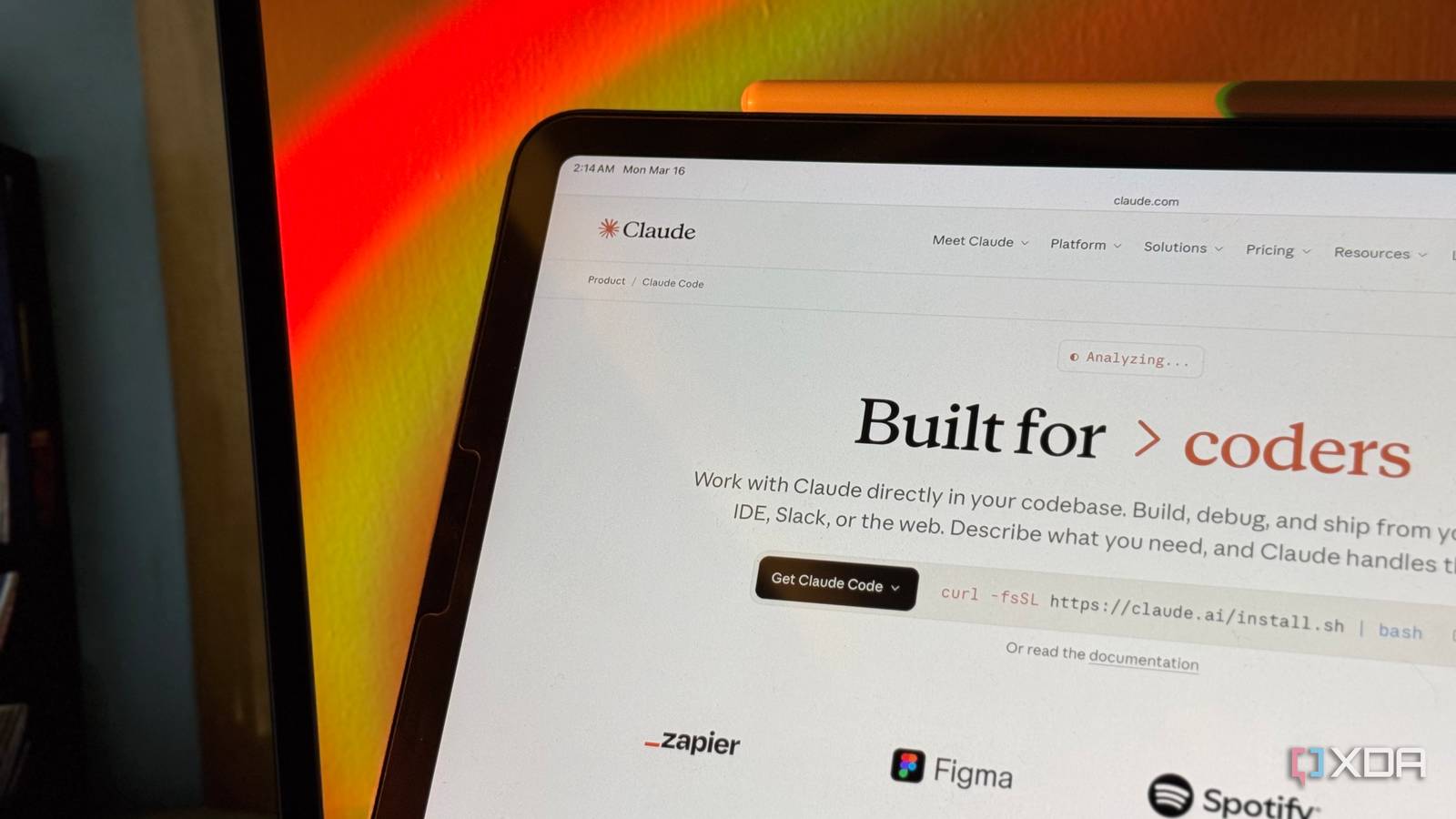
When most people think about AI assistants like Claude, their minds immediately leap to coding assistance, debugging, or technical documentation. Yet beneath this surface-level understanding lies a profoundly underutilised capability that has nothing to do with programming whatsoever. By connecting four seemingly unrelated services to Claude, a remarkable pattern emerges—one that reveals the true power of modern AI isn't in automation, but in something far more sophisticated: context orchestration.
What Context Orchestration Actually Means
Context orchestration represents a fundamental shift in how we should think about AI tools. Rather than viewing Claude as a simple task executor or automation engine, it functions as an intelligent conductor that maintains, synthesises, and applies contextual understanding across multiple platforms and workflows. When you connect disparate services—whether they're project management tools, communication platforms, research databases, or creative applications—Claude doesn't merely transfer data between them. Instead, it builds a rich, interconnected understanding of your work that grows more valuable with each interaction.
This distinction matters tremendously. Traditional automation follows rigid if-then logic: when X happens, do Y. Context orchestration, by contrast, understands the why behind your workflows. It recognises patterns, anticipates needs, and applies learnings from one domain to entirely different scenarios. The AI becomes a contextual layer that sits atop your digital ecosystem, making connections that would be impossible for simple automation scripts to achieve.
Four Non-Coding Services That Transform Claude's Capabilities
The real revelation comes when integrating Claude with services that exist far outside the development sphere. These connections demonstrate how context orchestration creates value in unexpected places, turning Claude into something far more versatile than a coding companion.
Research and Knowledge Management
Connecting Claude to research tools and knowledge bases transforms how information flows through your work. Rather than manually copying findings, synthesising notes, or struggling to remember where you stored that crucial insight, Claude maintains contextual awareness across your entire research landscape. It can draw connections between a article you read three weeks ago and a question you're wrestling with today, providing synthesis that feels genuinely intelligent rather than mechanically retrieved.
Project Coordination Platforms
When integrated with project management services, Claude doesn't simply update task statuses or move cards between columns. It understands project narratives, recognises when scope creep is occurring, and can suggest resource reallocation based on patterns it observes across multiple projects. The AI maintains awareness of team dynamics, deadline pressures, and strategic priorities in ways that pure automation cannot replicate.
Communication and Collaboration Tools
Perhaps most surprisingly powerful is connecting Claude to communication platforms. Here, context orchestration shines brightest. The AI can participate in conversations whilst maintaining awareness of company culture, ongoing projects, individual communication preferences, and historical decisions. It doesn't just respond to messages—it understands the subtext, references previous discussions, and contributes in contextually appropriate ways.
Creative and Content Platforms
Linking Claude to creative tools reveals another dimension of context orchestration. Whether working with design platforms, content management systems, or multimedia applications, Claude maintains awareness of brand guidelines, stylistic preferences, audience demographics, and content performance patterns. This contextual layer enables it to provide suggestions that align with established creative directions whilst identifying opportunities for innovation.
The real power of Claude is not automation—it's context orchestration. The difference transforms AI from a tool that does things for you into an intelligence layer that works with you.
The Practical Benefits You'll Actually Notice
Understanding context orchestration conceptually is one thing; experiencing its practical advantages is quite another. Users who embrace this approach report several consistent benefits that fundamentally change their relationship with digital work:
- Reduced cognitive load: No longer needing to maintain all contextual threads in your own memory, as Claude holds and applies this understanding across platforms
- Faster context switching: Moving between projects or tasks becomes smoother because the AI maintains continuity even when your attention shifts
- Improved decision quality: Recommendations incorporate broader context than you might consciously recall, leading to more informed choices
- Discovery of non-obvious connections: The AI identifies relationships between seemingly unrelated information that human pattern recognition might miss
- Consistency across platforms: Your working style, preferences, and standards remain coherent even when spread across multiple tools and services
Why This Matters
The implications of context orchestration extend far beyond individual productivity gains. This capability represents a genuinely new paradigm in human-computer interaction—one where AI functions less as a tool and more as a contextual intelligence layer woven throughout our digital ecosystems.
For professionals working across multiple domains, this matters immensely. Knowledge workers no longer operate in single-application silos. We constantly shift between communication platforms, project tools, research databases, creative applications, and analytical systems. Each context switch historically meant losing continuity, forcing us to rebuild understanding or rely on imperfect memory. Context orchestration eliminates this friction, creating seamless continuity across our fragmented digital lives.
Moreover, this approach democratises capabilities once available only through expensive custom software development. Previously, building intelligent systems that maintained context across platforms required substantial technical investment. Now, by thoughtfully connecting existing services to Claude, non-technical professionals can achieve sophisticated workflow intelligence without writing a single line of code.
The underrated nature of this capability stems from a misunderstanding about AI's highest value. The technology industry has obsessively focused on automation—replacing human effort with machine execution. Yet context orchestration suggests a different future: not humans or AI, but humans and AI working in genuine collaboration, with the AI providing contextual intelligence that augments rather than replaces human creativity and judgement.
As we move forward, those who recognise and leverage context orchestration will find themselves working at a fundamentally different level than those who view AI merely as an automation engine. The question isn't whether your tasks can be automated—it's whether your entire working context can be intelligently orchestrated. For Claude users willing to look beyond coding applications, the answer is increasingly, remarkably, yes.
Originally reported by Xda-developers. Read the original article →
This article was independently written using AI based on publicly available news. It is not affiliated with or endorsed by the original publisher.